What does a confectioner do?
A confectioner makes sweets such as chocolates, marshmallows or caramels. Depending on the kitchen, the job may also include cakes and pastries. In everyday English, confectioner can also mean a person or shop that sells sweets. This guide looks at the work of making them, from choosing a product to checking a finished batch.
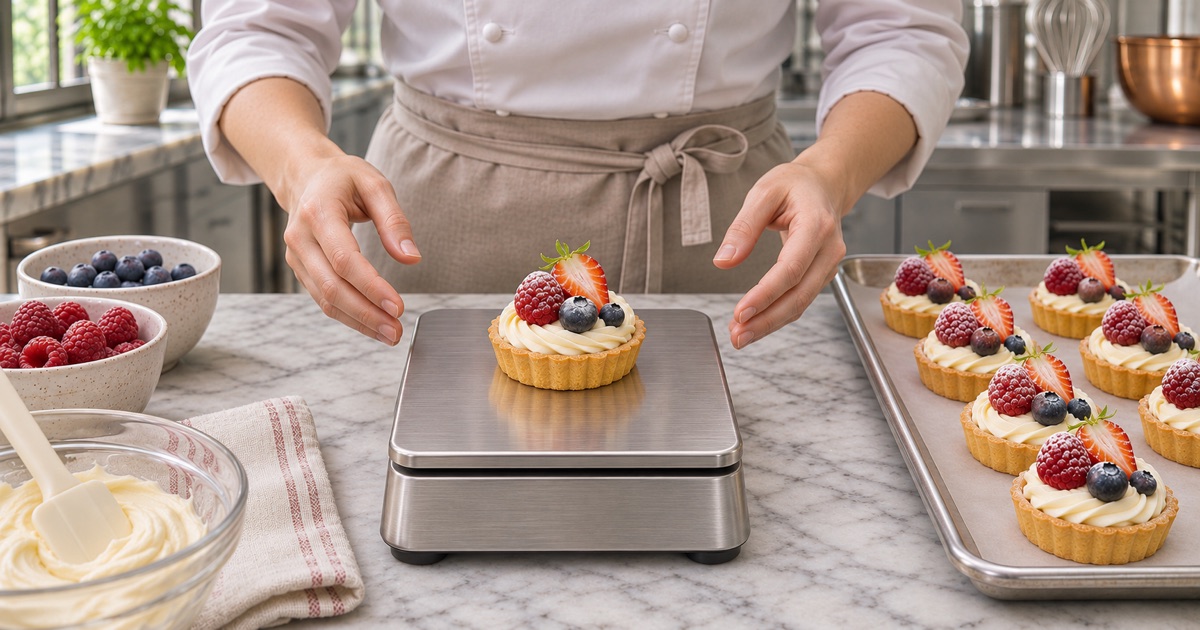
Confectioner, pastry chef or baker?
A confectioner might cook a fruit jelly, cut and coat caramels, or temper chocolate before moulding it. A pastry chef may make tart shells, prepare creams and mousses, assemble layered cakes and plate desserts. A baker typically works with dough, including shaping and fermentation for breads and buns. The roles overlap on products such as sweet pastries, and a small shop may have one person doing several of these jobs.
Read the product list and the responsibilities when comparing jobs or courses. Making filled chocolates calls for moulding and shell work. Making a tray of custard tarts calls for even baking and consistent filling. Both jobs depend on accurate weighing, a good production sequence and attention to texture.
What happens before and after a batch
Start with a product specification. For a filled chocolate, write down the target weight, number of pieces, shell finish and filling texture. Check which ingredients and tools you have, weigh the components and plan when to make, unmould and pack the pieces. Keep the batch sheet close enough to record changes as they happen.
Assess a sample against the specification before packing, count the pieces that pass, and record defects. Note whether a shell cracked, a filling was uneven or pieces stuck to the mould. This gives the next shift something to investigate and helps distinguish a one-off defect from a repeatable problem.
A worked example with 24 portions
Suppose you plan 24 tartlets at 45 g each, or 1,080 g of finished product. If 21 pieces pass the check and each weighs 45 g, you can pack 945 g. You reached 87.5% of the planned piece count and are 135 g short of the target packed weight.
Check the batch notes before attributing that 135 g to a cause. Compare rejected pieces, trim, leftovers and actual portion weights. On the next batch, change one thing, such as how you portion the filling, and check whether more pieces meet the same specification.